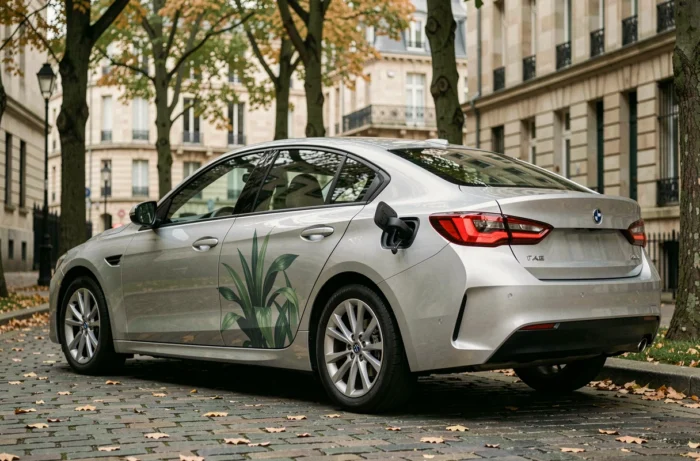
An hybrid car combines a thermal engine (gasoline or diesel) and an electric motor powered by an onboard battery. This dual propulsion system helps reduce fuel consumption by alternating or combining the two energy sources depending on driving conditions.
Energy recovery during braking: the mechanism that distinguishes hybrids from thermal vehicles
The central technical principle of a hybrid vehicle is based on regenerative braking. During deceleration or braking, the electric motor operates as a generator: it converts the car’s kinetic energy into electricity, which is stored in the battery.
In a conventional thermal vehicle, this energy is lost as heat in the brake discs. The hybrid recovers it and reuses it to propel the vehicle at low speeds or during startup.
This recovery cycle explains why hybrids consume significantly less in urban environments, where braking is frequent, compared to highways, where the thermal engine runs continuously. To delve deeper into the meaning of hybrid cars on Cariboost, the recovery mechanism is detailed along with its technical variants.
Mild hybrid, full hybrid, plug-in hybrid: the concrete differences in consumption

The term “hybrid” encompasses very different architectures, and the ecological gain varies significantly depending on the chosen type.
- The mild hybrid uses a small electric motor that assists the thermal engine without ever propelling the vehicle alone. The consumption gain remains modest, on the order of a few percent compared to an equivalent thermal vehicle.
- The full hybrid can operate in 100% electric mode over short distances and at low speeds. The battery is recharged only through regenerative braking and the thermal engine. The reduction in consumption in urban areas is significant.
- The plug-in hybrid (PHEV) features a larger battery that can be charged from the grid. Its electric range reaches several tens of kilometers, allowing for a commute without engaging the thermal engine.
The PHEV offers the best ecological potential, under one strict condition: that the driver regularly charges the battery from the electrical grid. Without charging, the vehicle carries unnecessary battery weight, and its actual consumption can exceed that of a lighter full hybrid.
Actual consumption of hybrids: the gap between promise and daily use
The consumption values displayed by manufacturers are measured according to standardized cycles (WLTP in Europe). These cycles often underestimate actual consumption, and the gap is particularly pronounced for plug-in hybrids.
User feedback shows that PHEVs used without regular charging consume significantly more than their theoretical values, especially plug-in hybrid SUVs. The additional weight of the battery penalizes overall efficiency.
For a non-plug-in full hybrid, the gap between standardized cycle and actual use remains more contained, as the system does not depend on the driver’s charging behavior. The gain in urban driving is real and reproducible.
When hybrids consume more than a recent thermal vehicle
On the highway at a constant speed, the electric motor of a hybrid provides little benefit. The thermal engine accounts for almost all propulsion while moving a vehicle weighed down by the battery and the second powertrain. A driver who primarily drives on the highway will not derive measurable ecological benefits from a hybrid powertrain compared to a well-sized recent thermal engine.
Hybrid or electric: in which cases does the hybrid remain relevant in light of regulations
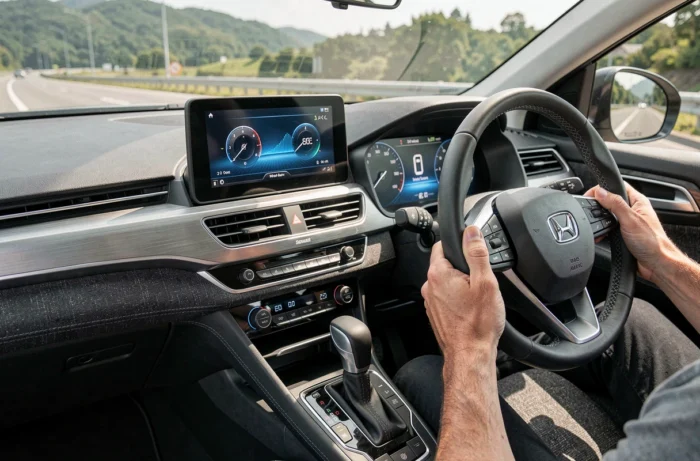
The European regulatory framework clearly pushes towards full electric. The regulation adopted in 2023 aims for a 100% reduction in CO₂ emissions from new cars by 2035, which means, in principle, the end of sales of new thermal and hybrid vehicles by that date.
Open discussions in 2025-2026, however, introduced possible flexibilities for certain powertrains. The hybrid is therefore not yet definitively excluded from the new European market, but its place is gradually diminishing.
On the fiscal side, the trend is clear: purchase aids and tax benefits are increasingly focused on 100% electric vehicles and, in some cases, on PHEVs. Mild hybrids and full hybrids are gradually losing their economic advantages compared to electric vehicles.
Profiles for which hybrids retain an advantage
The hybrid remains a coherent choice in specific situations:
- Drivers who primarily make short urban and suburban trips, without easy access to a charging station (the full hybrid requires no charging infrastructure).
- Geographical areas where the charging station network is still underdeveloped and where the range of a 100% electric vehicle poses practical constraints.
- Budgets that do not allow access to a new electric vehicle, whose purchase price remains higher than that of an equivalent hybrid despite subsidies.
Conversely, for an urban driver with access to a charging station, a 100% electric vehicle offers a superior ecological balance compared to any form of hybridization. The thermal engine, even used occasionally, generates local emissions that the electric vehicle completely eliminates.
The growth of registrations of 100% electric vehicles in Europe is accelerating faster than that of hybrids. The hybrid market remains dominant in volume in the short term, but it now functions as a transitional solution rather than a final destination for ecological mobility. The choice between the two depends less on technology than on the infrastructure and budget actually available.