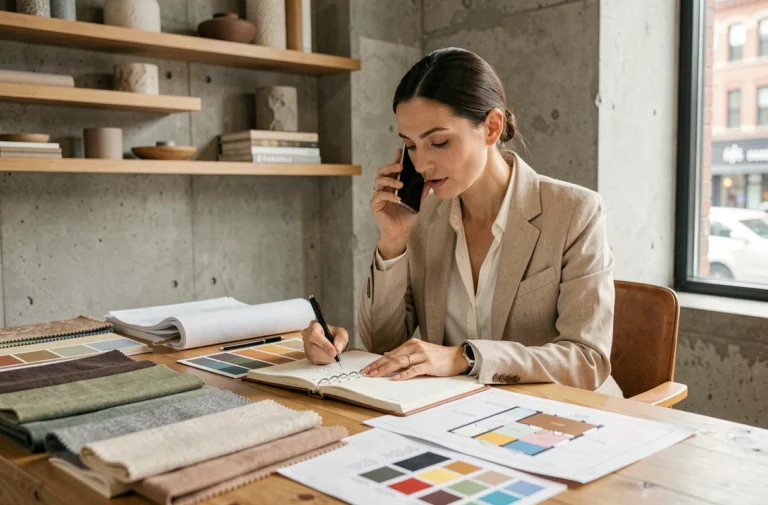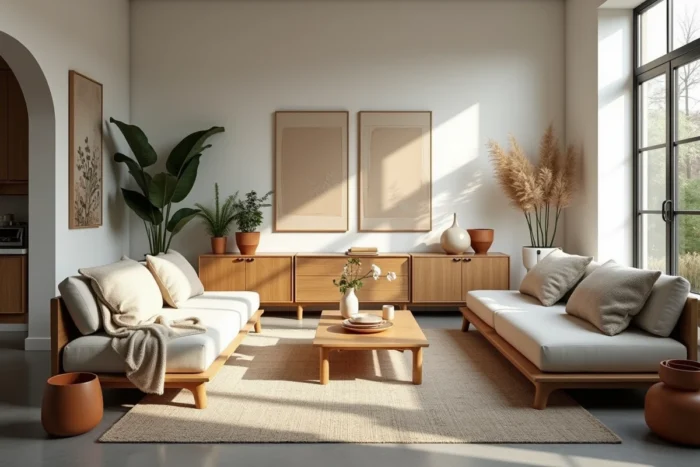
Which decor inspirations truly transform a room, and which are merely cosmetic refreshes? To clarify, this ranking brings together ten concrete ideas, evaluated based on their visual impact, durability, and ease of implementation.
1. Three-layer lighting to reshape volumes
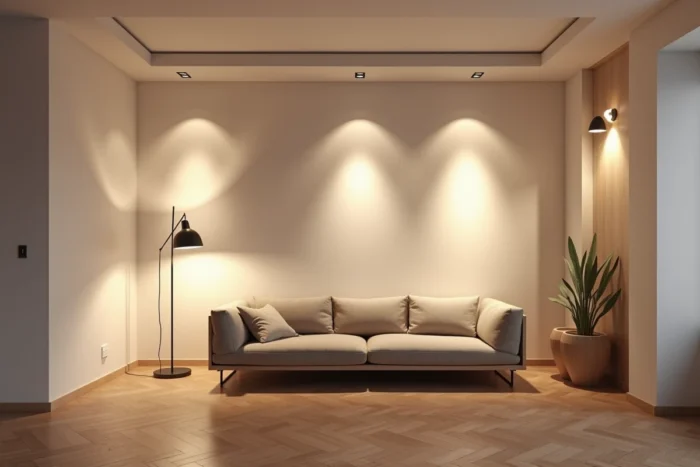
The trends for 2026 place layered lighting (ambient, task, accent) as the most effective transformation lever before any furniture changes. A dimmable ceiling light provides general illumination, a reading lamp or a task light covers functional needs, and then accent lighting highlights a textured wall, a plant, or a piece of art.
This segmentation alters the perception of volumes without touching the structure. A rectangular living room appears wider when the focus is on the side walls rather than the back of the room.
Browsing decor inspirations on Idylle Habitat, we see that this layered approach is prevalent in most recent interiors showcased.
2. Reconstituted natural stone wall to anchor the atmosphere
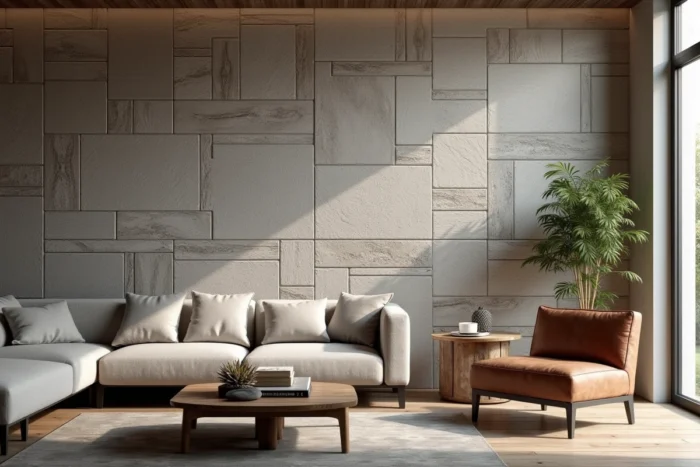
Just one wall panel in stone (cladding, reconstituted stone tiles) is enough to create a focal point in the living room or bedroom. Stone brings a raw texture that neither paint nor wallpaper can replicate.
Current claddings can be installed on a healthy wall without major renovations. Their thickness remains low, preserving the living space. Light tones (limestone, travertine) work well in small spaces without darkening the room.
3. Thrifted objects and upcycling for sustainable slow decor
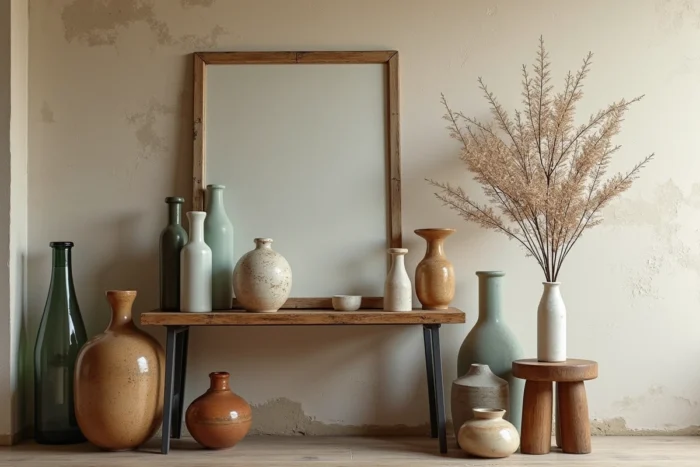
Slow decor, decorating less but better, is emerging as a structuring trend between 2025 and 2026. Durable furniture, recycled materials, local craftsmanship: the goal is to reduce the quantity of objects while increasing their aesthetic and emotional value.
A thrifted piece of furniture sanded and coated with a matte finish, a light fixture made from an old industrial object: these unique items add character without standardizing the space. Upcycling also prevents waste, an increasingly important consideration in design choices.
4. Immersive color palette on an accent wall
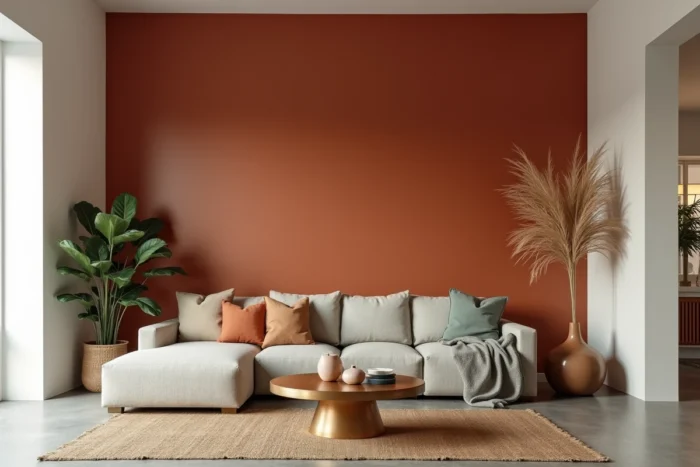
Repainting a single wall in an immersive color (terracotta, deep sage green, slate blue) transforms the atmosphere of a room in just a few hours. The trends for 2026 favor immersive colors inspired by nature over artificial saturated shades.
The accent wall works best behind the headboard, behind a sofa, or on the wall facing the entrance of the room. Other walls remain neutral to avoid a cave effect.
5. Textiles in natural materials to soften the space
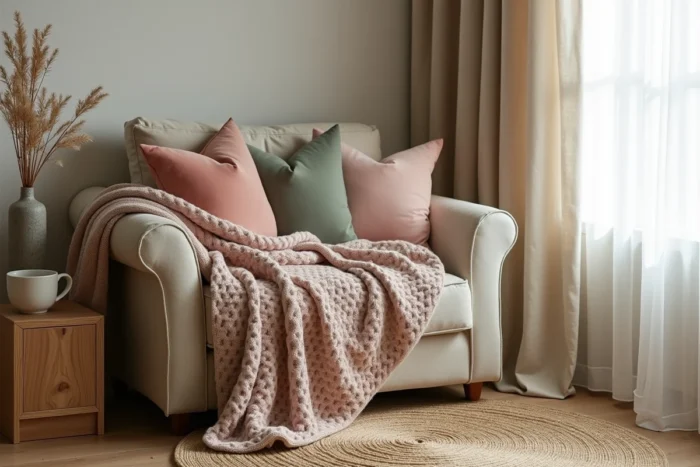
Changing textiles remains one of the quickest actions to alter the atmosphere. Washed linen, textured cotton, boucle wool: natural materials provide tactile depth that synthetic fabrics cannot replicate.
Some guidelines for selection:
- Washed linen for curtains and cushion covers, natural crumpled effect that fits into a contemporary or country interior
- Thick wool for throws and rugs, ideal in living rooms or bedrooms to absorb sound and warm the ambiance
- Textured cotton for table linens and bathroom accessories, understated texture and easy maintenance
6. Solid wood table as the central piece of the living area
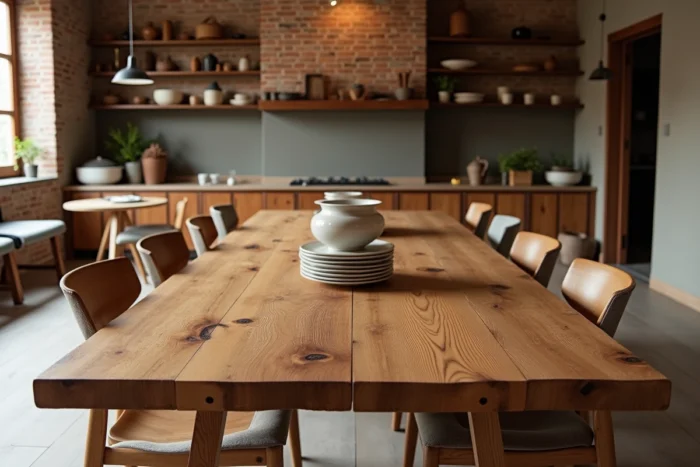
A solid wood table becomes the visual anchor around which the rest of the furniture is organized. Oak, walnut, ash: each type imposes a grain and a hue that guide the style of the room.
Solid wood ages better than laminate or veneer. Signs of use (small scratches, patina) enhance its character over the years instead of degrading it.
7. Adaptive connected lighting for effortless ambiance variation
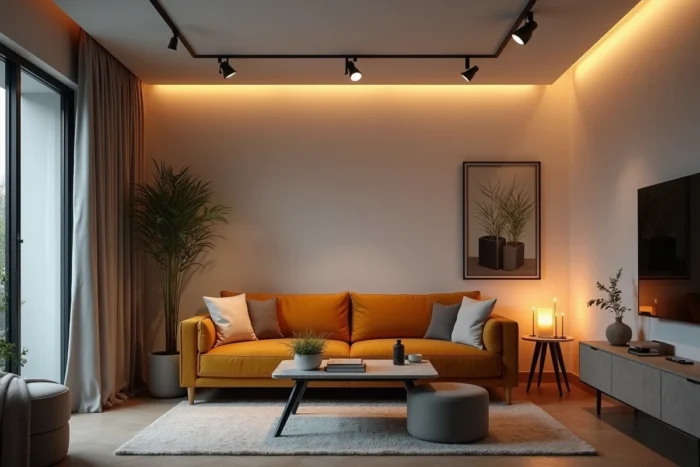
The trends for 2026 incorporate automatic adaptive lighting based on the time of day and natural light. Warm color temperature in the evening, neutral during the day: the change is automated via an app or a sensor.
This technology integrates into a sleek design thanks to standard-sized bulbs. No visible housing, no additional wiring. The effect on the ambiance of a room is comparable to a complete change of fixtures, at a much lower cost.
8. Accumulation of frames and art objects on a wall shelf
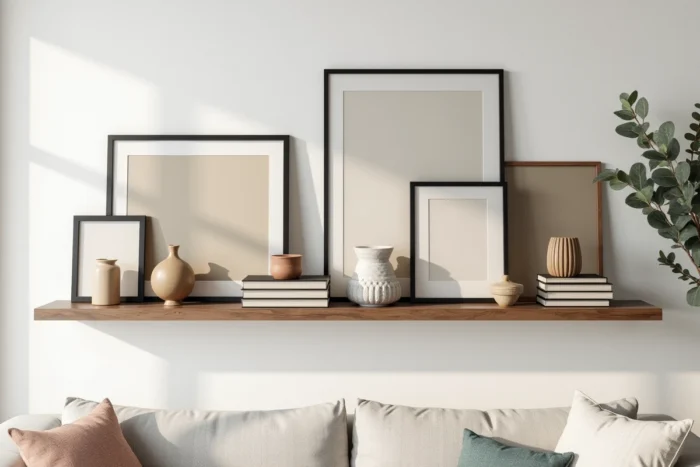
Replacing a single painting with a composition on an open shelf allows for evolving the decor without drilling new holes. Frames of different sizes, small sculptures, ceramic vases: the diversity of objects creates a personal gallery effect.
The practical rule: vary heights and alternate materials (wood, metal, ceramic) to avoid monotony. Limiting the palette to two or three dominant colors maintains coherence.
9. Grouped indoor plants for a lush mass effect
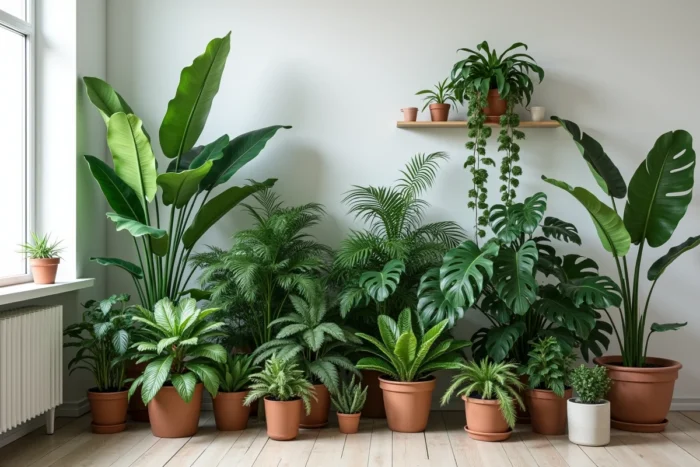
An isolated plant often goes unnoticed. Grouping three to five plants of varying heights and foliage creates a true mass effect that transforms a dead corner into a point of interest.
Placing the group near a source of natural light simplifies maintenance. Combining a tall plant (ficus, strelitzia), a trailing one (pothos, ivy), and a compact one (calathea, pilea) adds dimension without cluttering the floor.
10. Smart detectors integrated into a sleek design
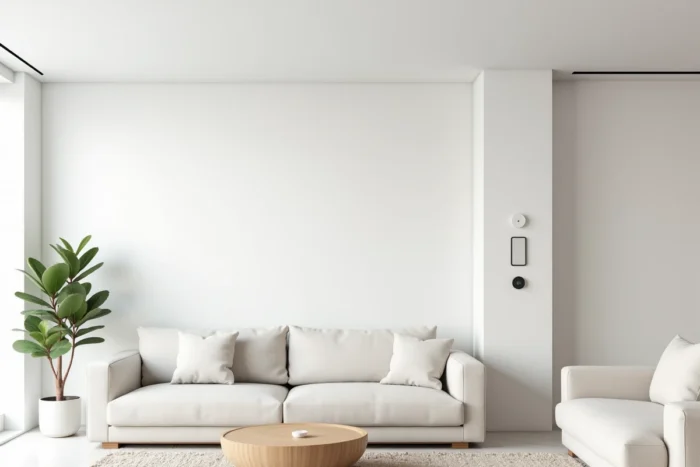
Smart detectors (air quality, water consumption, energy) are part of the technological elements that integrate into interior decoration in 2026. Their compact and neutral design allows them to blend into a shelf or wall without disrupting the aesthetic.
Beyond the decor aspect, these sensors provide useful data to adjust ventilation or reduce energy consumption. Here, decoration meets functionality, a crossover often overlooked by purely visual approaches to interior design.
Among these ten ideas, layered lighting and natural materials offer the most favorable transformation/effort ratio. An interior that plays with light and textures radically changes atmosphere, even without replacing a single piece of furniture.