
A student who does theater on Wednesdays, basketball on Saturdays, and reviews their lessons in between: this scenario resembles the daily life of many children and teenagers. Succeeding in studies while engaging in extracurricular activities does not stem from innate talent. It is a matter of method, conscious choices, and some concrete adjustments.
Physical activity and concentration in class: what recent research shows
You may have noticed that a child returning from a sports practice sometimes seems calmer and more attentive the next day? It’s not just an impression.
A study by the National Education Scientific Council (CSEN), published in 2023, links the practice of a structured and supervised physical activity to better academic results. The connection is particularly clear in middle school, where researchers also observe a decrease in attention disorders and fatigue in class.
The key word here is “structured.” Running around on the playground does not produce the same effects as regular training with a framework, goals, and a group. Supervised sports teach perseverance, respect for a schedule, and effort management, all skills that transfer directly to homework and revision.
British data from the Centre for Young Lives supports this: regular access to quality extracurricular activities (clubs, arts, sports, civic engagement) is correlated with improved attendance and reduced school dropout rates. Engaging outside of school helps to stay in the educational system, not just to excel in it. Complementary pathways between studies and extracurricular life are documented on https://www.etudiactiv.fr/, which lists various programs and approaches.
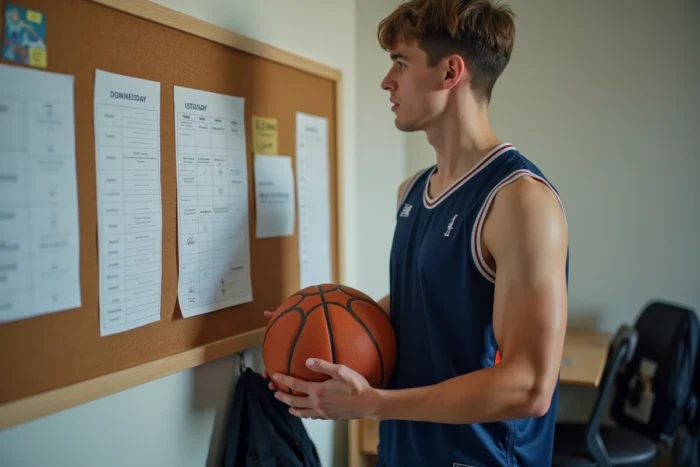
Balancing studies and extracurricular activities: setting a realistic time volume
The temptation to multiply activities is strong: music on Monday, sports on Wednesday, drawing classes on Friday. The risk is saturating the schedule to the point where homework becomes a chore done hastily on Sunday night.
Rather than counting activities, it is more useful to count hours. A simple guideline works well:
- List all class hours, transport, and sleep over a typical week to visualize the time actually available.
- Set fixed times for homework and revision before adding extracurricular slots, not the other way around.
- Keep at least two evenings a week free from scheduled activities to accommodate unforeseen events (a test to prepare for, temporary fatigue, a simple need for rest).
Balance is built by protecting school time first, then adding activities into the remaining space. It’s less appealing than an ultra-packed schedule, but it’s manageable over an entire year.
Exam periods: knowing when to ease off
Recommendations from North American guidance services emphasize a often-overlooked point: beyond a certain volume of weekly commitments, the risk of declining results and excessive stress increases significantly. This observation also applies to unpaid activities.
In practice, temporarily reducing the pace of extracurricular activities before an exam is not a failure. It’s a trade-off. A coach or music teacher will understand if a student skips two sessions to prepare for their diploma or baccalaureate.
Music, sports, volunteering: choosing activities that develop transferable skills
Not all activities are equal in terms of personal development. Some produce skills that can be directly reinvested in the school context.
Piano, for example, trains working memory, coordination, and the ability to break down a complex task into sequences. A piece is learned measure by measure, just like a chapter of a course is revised notion by notion.
Team sports (basketball, handball, soccer) develop communication under pressure and quick decision-making. These skills are found in oral presentations and group work.
Volunteering or community engagement brings something else: the ability to organize around a concrete project with deadlines. Organizing a fundraiser, coordinating an event, managing a team of volunteers—these are project management skills that school rarely teaches explicitly.

The trap of activities “for the CV”
A survey conducted in 2022 by Julie Couronné, in collaboration with Camille Dupuy, François Sarfati, and Jules Simha, explores how extracurricular activities strengthen success pathways for students from privileged backgrounds. One conclusion stands out: the most beneficial activities are those pursued for pleasure and over time, not those chosen solely to fill out a Parcoursup application.
A child who has been playing the violin for six years because they enjoy it gains more than a high school student who joins three clubs in their senior year just to check boxes. Consistency and enjoyment matter more than quantity.
Parents’ role in balancing school and extracurricular activities
Parents play a regulatory role, not a planning one. The distinction matters. Forcing a ten-year-old into five activities creates stress. Guiding them in choosing one or two practices they enjoy, then helping them stick to their schedule, fosters autonomy.
Some concrete points for parents:
- Watch for signs of overload: declining grades, chronic fatigue, loss of enthusiasm for an activity once enjoyed.
- Discuss the schedule with the child each term to adjust the number of hours based on academic load.
- Accept that a child may abandon an activity. Changing their mind after a year of practice is not a whim; it’s a learning experience in making choices.
The best indicator remains the child’s daily behavior: a thriving student who sleeps enough and does their homework without conflict has likely found the right balance, even if their schedule appears busy from the outside.
Academic success and extracurricular investment do not oppose each other. They mutually enrich each other when the volume remains manageable, when activities are chosen for enjoyment, and when rest time is not sacrificed. The real risk is not doing too much; it’s never stopping to check if the balance still holds.