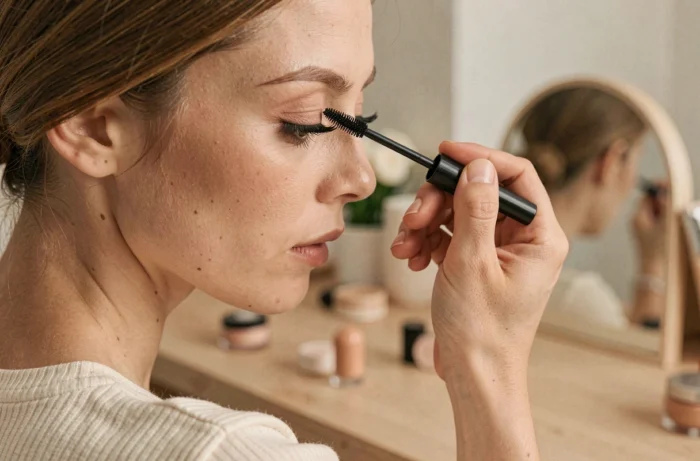
Ricin and mascara are often found side by side in a makeup bag, but they serve very different purposes. Ricin is a treatment designed to strengthen and thicken eyelashes over time. Mascara, on the other hand, provides visible results in just a few seconds thanks to its pigmented formula. Understanding what separates them allows you to choose the right product based on the desired effect, and sometimes to combine both.
Ricin and mascara: two formulas, two goals for your lashes
Ricin belongs to the family of eyelash serums. Its formula typically contains nourishing active ingredients (castor oil, peptides, sometimes derivatives like Redensyl or Anagain) that act on the hair follicle. The goal is to stimulate growth and limit breakage over the weeks.
Mascara works in the opposite way: it coats each lash with a layer of pigments and waxes to create an immediate effect. Volume, length, curl – it all depends on the brush and formula chosen, but the result disappears upon makeup removal.
To clearly understand the difference between ricin and mascara, remember this simple distinction: ricin acts on the substance of the lash, mascara acts on its appearance.
Composition of eyelash serums: what a ricin really contains
Have you noticed that some serums promise longer lashes in just a few weeks? The ingredients that produce this effect fall into two main categories, and the distinction matters.
The first category includes gentle cosmetic actives. This includes castor oil, biotin, biomimetic peptides, or plant extracts like Redensyl and Anagain. These components nourish existing lashes and can extend their natural growth phase. The result is gradual: it often takes several weeks of daily application before a change is noticeable.
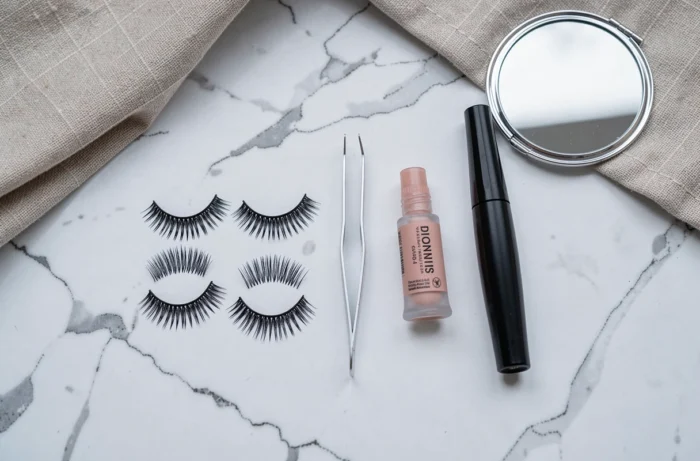
The second category includes prostaglandin analogs (bimatoprost, isopropyl cloprostenate). These molecules are significantly more powerful. Bimatoprost is actually a pharmaceutical active ingredient, originally used in eye drops for glaucoma. Doctors regularly warn about the potential side effects of these analogs: eye irritation, darkening of the eyelid, or even changes in iris color.
Controls conducted in Europe revealed that more than half of the analyzed serums contained substances considered problematic for common cosmetic use. Before purchasing a ricin, check the INCI list on the packaging.
- Castor oil, peptides, Redensyl: cosmetic actives with gradual action, generally well tolerated.
- Bimatoprost and prostaglandin analogs: powerful actives, faster results, but documented risks of eye side effects.
- Preservatives and fragrances: to be limited if you wear contact lenses or have sensitive eyes.
Brush, formula, and application: how mascara changes the look
Mascara operates on three simultaneous levers: the brush, the formula, and the application technique. Each influences the final result in very different ways.
The shape of the brush determines the main effect. A thick brush with dense fibers deposits a large amount of product on each lash, creating volume. A fine, elongated brush separates lashes one by one and gives an impression of length. Curved silicone brushes, on the other hand, create a curl by lifting the lash at the root.
The formula also plays a direct role. Mascaras based on natural waxes offer flexible hold, easy to remove. Waterproof versions contain resins that resist water and sweat, but require a bi-phase or oily makeup remover. This more aggressive makeup removal step can weaken lashes over the long term.
In terms of application, two thin coats are better than one thick coat. Applying too much product at once causes clumping and weighs down the lash, which negates the curling effect. Allow the first coat to dry for a few seconds before applying the second.
Ricin and mascara together: how to combine care and makeup
The question that often arises: can you use ricin and mascara at the same time? The answer is yes, as long as you follow a specific order.
Ricin should be applied in the evening, on clean, makeup-free lashes. It is during the night that the actives penetrate best, without interference from other products. In the morning, you can apply your mascara as usual.

This combined routine allows you to work on two different horizons. The treatment strengthens the substance of the lash week after week. The mascara enhances the look on a daily basis. After a few weeks of using ricin, many people find they need fewer coats of mascara to achieve the same effect because their natural lashes have gained density.
- Evening: careful makeup removal, then application of ricin at the root of the upper lashes.
- Morning: mascara in two thin coats, starting from the root to the tip.
- Precaution: avoid applying ricin and mascara at the same time, as the mascara formula prevents the serum actives from reaching the lash.
Choosing between ricin and mascara based on your actual need
The choice depends on what you expect. If your lashes are naturally short or sparse and you are looking for a lasting change, an eyelash serum (ricin) based on gentle cosmetic actives is relevant. The results take time, but they last as long as you maintain the application.
If your need is purely aesthetic and immediate (a more intense look for the day), mascara is sufficient. The eyelash serum market is experiencing steady growth because more and more people are looking to reduce their dependence on extensions and false lashes. Ricin fits into this logic: achieving fuller lashes without professional application.
A well-chosen mascara (suitable brush, respectful formula) remains the quickest gesture to enhance the look. A well-formulated ricin acts deeply on the quality of the lash. The two do not oppose each other; they complement each other based on the result horizon you are aiming for.